
Two Fellows from Ghent: the Crazy World of Alexander Agricola and Jacob Obrecht
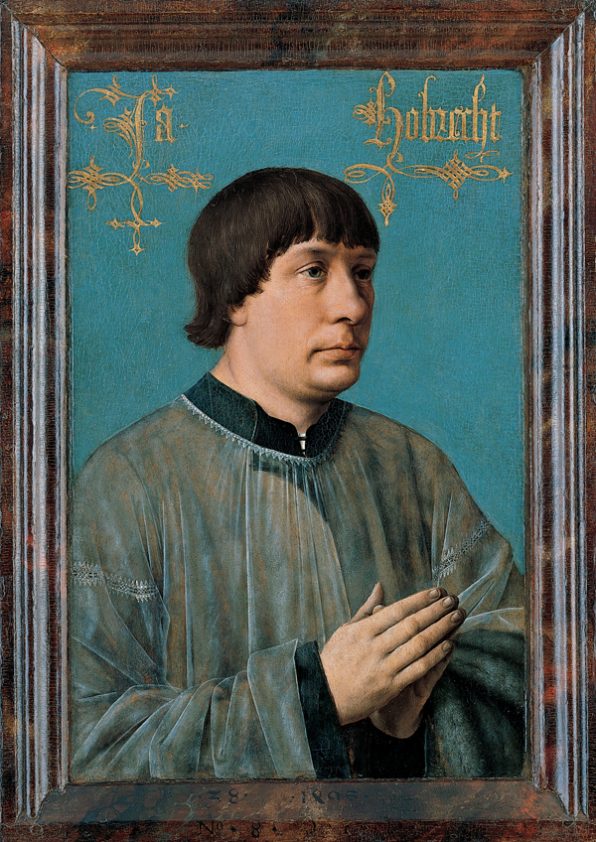
With this programme we again team up with Gusto Renaissance Winds to bring two of the great originals of Renaissance music up close and face to face. Both born in Ghent, Alexander Agricola (c.1456–1506) and the slightly younger Jacob Obrecht (or Hobrecht, c.1458–1505)) may well have rubbed shoulders as choirboys. They went on to have prestigious careers as composers and singers, their music celebrated and sought out by the most powerful and discerning patrons. Each has his own inimitable style, but it is certain that each knew the other’s work, not least because of the number of pieces with shared musical ideas.
For such luminaries, surprisingly little is known about either composer’s early years. Like his illustrious predecessor Du Fay, Agricola was born illegitimate, the son of a prominent Ghent businesswoman, Lijsbette Naps, and Heinric Ackerman, the procurator in a wealthy Ghent household. But his first unambiguous position, as a petit vicaire (singing man) at Cambrai Cathedral in 1475-6, makes it clear that he had been a choirboy somewhere, probably at the church of St Nicholas in his native Ghent. The many ‘instrumental’ pieces in his oeuvre are unsurprising in the context of our knowledge that he achieved high renown as a string player.
A likewise instrumental background lay behind the career of Jacob Obrecht. While documentation of his early career is similarly lacking, we know from the text of his autobiographical motet Mille quingentis that his father was Willem Obrecht, a Ghent city trumpeter over the long span from 1452 until his death in1488. Given this parentage it is highly likely that Obrecht’s first musical training, following—as was typical—his father’s example, was as a trumpeter. Nevertheless he was clearly steered ultimately to the clerical side, being named as a master in 1480. by which time he would have been 22 or 23, as can be determined from his exceptionally surviving portrait of 1496, at which point (as its inscription states) he was 38.
Programme:
T’andernaken, Jacob Obrecht (1457/8-1505)
In minen zin, Alexander Agricola (c.1446-1506)
Missa In minen zin: Agnus Dei II, Agricola
Allez regretz, Agricola, based on a tenor by Hayne van Ghizeghem (c.1445between1493/1497)
Si dedero, Agricola
Salve regina II, Agricola, based on tenor of Walter Frye (d. before 1475),
Ave regina celorum)
Meiskin es u cutkin ru, Obrecht
Benedictus from Missa Adieu mes amours, Obrecht
Ave regina celorum, Obrecht
Si sumpsero, Obrecht

– INTERVAL –
Rompeltier, ?Obrecht
Je ne vis oncques, Agricola, based on a tenor by Gilles de Binche, dit Binchois (c.1400-1460)
Credo Je ne vis oncques II (c.9’), Agricola
Salve regina à 4 (with alternatim chant), Obrecht
Si dormiero, ?Pierre de la Rue (c.1452-1518)/?Heinrich Isaac (c.1450-1517)
T’andernaken, Agricola
Sanctus Missa Fortuna desperata, Obrecht
Fortuna desperata à6, Felice, arr. Agricola